

Back pain and spinal disorders are among the most common health issues affecting adults worldwide. Conditions such as degenerative disc disease, herniated discs, and chronic lower back pain can significantly impact your quality of life, making even simple tasks challenging.
When conservative treatments like physical therapy, medications, or lifestyle changes fail, surgical intervention may become necessary.
Two of the most commonly discussed surgical options are Artificial Disc Replacement (ADR) and Spinal Fusion. But which is better? In this blog, we examine the differences, benefits, risks, and suitability of these procedures, along with the latest statistics.
What is Spinal Fusion
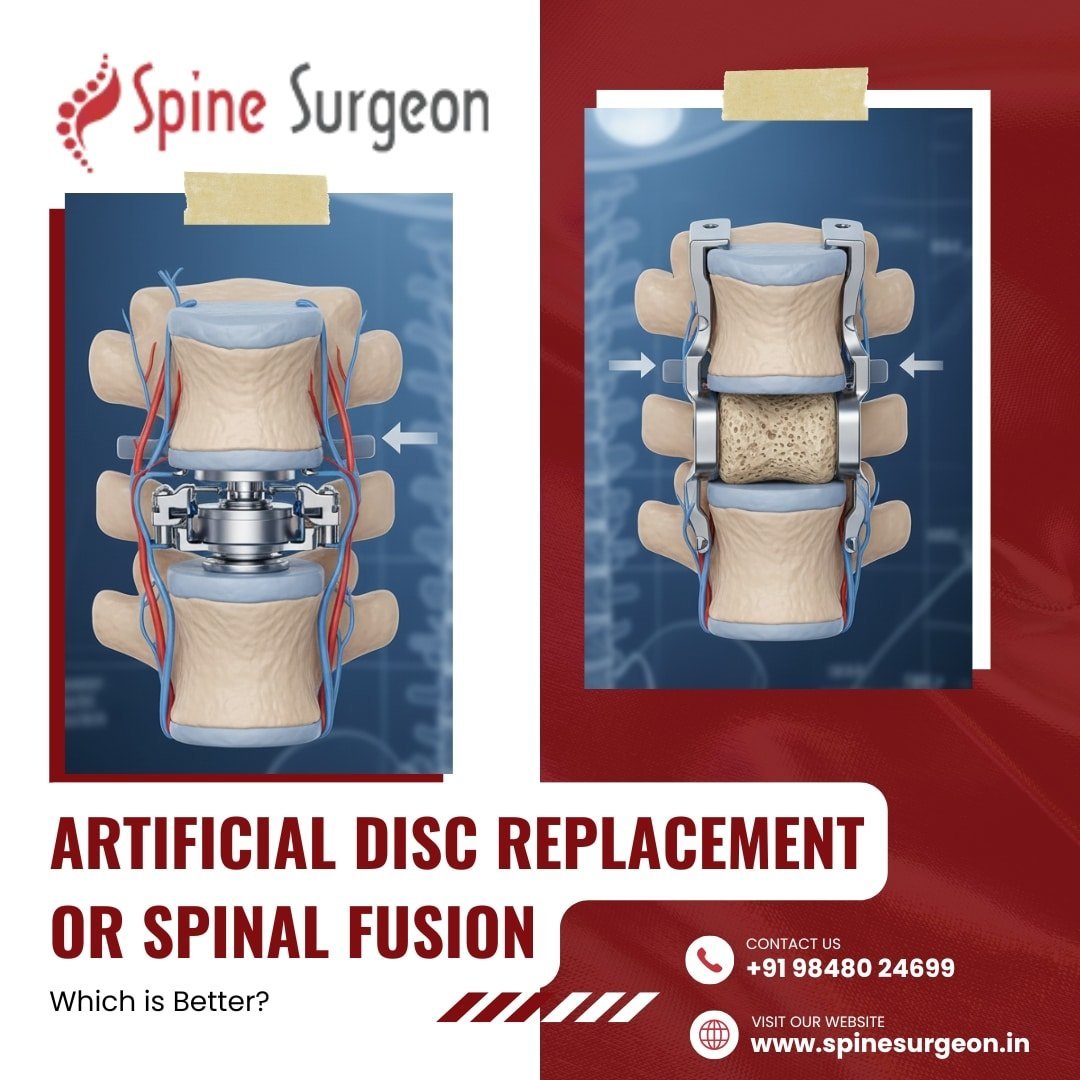
Spinal fusion, a surgical procedure, permanently joins two or more vertebrae in the spine, eliminating motion between them.
The goal is to reduce pain caused by abnormal motion or instability. During the procedure, the surgeon may use bone grafts, metal rods, screws, or cages to secure the vertebrae in place. Over time, the bone graft fuses with the vertebrae, creating a solid bone mass.
Spinal fusion is highly effective at reducing pain and providing stability to the spine. It is beneficial for patients with severe degeneration or spinal instability.
Spinal fusion has a proven track record, and studies suggest a success rate ranging from 70% to 90%. However, some long-term follow-ups report a success rate of around 51% over five years.
However, spinal fusion comes with certain limitations. The fused segment loses mobility, which can affect the overall flexibility of the spine.
Additionally, fusion can increase stress on adjacent discs, potentially causing further degeneration over time. Recovery is generally longer, with patients often requiring 3 to 6 months before returning to normal activities.
What is Artificial Disc Replacement
Artificial Disc Replacement (ADR), also known as total disc replacement, is a modern alternative to spinal fusion.
In this procedure, the diseased or damaged disc is removed and replaced with an artificial disc designed to mimic the natural motion of the spine. ADR aims to maintain normal spine mobility while relieving pain.
One of the key benefits of ADR is that it preserves motion in the treated spinal segment, helping maintain overall spinal function.
By retaining movement, ADR may also reduce the risk of degeneration in adjacent discs, a common issue following spinal fusion.
Studies show ADR has a high success rate in highly selected population. Many patients often return to light activities within 6 to 12 weeks. However, ADR is not suitable for many conditions. Artificial disc replacement surgery is not typically performed nowadays for lumbar disc problems. It has a role currently in the cervical spine only.
Factors such as osteoporosis, spinal instability, or severe degeneration may make ADR less ideal. Additionally, the procedure is technically demanding, requiring precise placement and surgical expertise. While early outcomes are promising, long-term data are still being studied compared to the extensive history available for spinal fusion.
Spinal Fusion vs. Artificial Disc Replacement: What Patients Should Know
- Movement After Surgery
Spinal fusion locks the affected bones together, stopping movement in that area. Artificial disc replacement (ADR) allows the spine to keep moving more naturally.
- Stress on Nearby Discs
Fusion can put extra pressure on the discs above and below, which may wear them out faster. ADR helps share the load and may lower this risk.
- Who Is a Good Candidate?
Fusion is usually recommended for people with severe disc damage, spinal instability, or deformities. ADR is often best for patients with a single damaged disc and healthy bones around it and in cervical spine
- Age and Lifestyle
Younger, active patients may do better with ADR because it keeps the spine flexible and lowers the chance of problems in nearby discs.
- Bone Strength Matters
Healthy bones are important for ADR to work well. If you have weak bones or osteoporosis, fusion might be the safer option.
Which Option Is Right for Me?
Fusion is often better if you have severe damage, instability, or weaker bones.
ADR may be a good choice if you’re younger, active, and have only one damaged disc with strong, healthy bones.
Always talk with your spine specialist, who can guide you based on your unique health and lifestyle.
Recovery and Rehabilitation
Regardless of the chosen procedure, post-surgical rehabilitation plays a crucial role in achieving optimal outcomes.
Spinal fusion may require bracing and a longer period of activity restriction, while ADR patients often resume light activities sooner.
Physical therapy is commonly recommended for both procedures to strengthen core muscles, improve flexibility, and ensure proper spinal mechanics. Commitment to rehabilitation and lifestyle modifications can greatly enhance the long-term success of both surgeries.
The Future of Spine Surgery
Advancements in surgical technology, imaging, and implant design continue to improve outcomes for patients with spinal disorders. Artificial disc replacement represents a shift toward motion-preserving solutions, while spinal fusion remains a reliable option for stabilizing severely damaged spines. Personalized care, guided by a spine specialist, ensures the right procedure is chosen for each patient.
Conclusion
Deciding between artificial disc replacement and spinal fusion is not a one-size-fits-all decision. If you are struggling with chronic back pain or have been diagnosed with degenerative disc disease, consulting an experienced spine surgeon is essential. Dr. Surya Prakash, a renowned spine surgeon, specializes in advanced spinal procedures, including both artificial disc replacement and spinal fusion. With expertise in evaluating each patient’s unique condition, Dr. Prakash can recommend the most appropriate surgical option to relieve pain, restore function, and improve quality of life.
Take the first step towards a pain-free life by scheduling a consultation today. Don’t let spinal discomfort limit your mobility and daily activities—your spine deserves expert care.
Book an appointment with Dr. Surya Prakash today to discuss whether artificial disc replacement or spinal fusion is the right solution for your back pain.

