

Some surgeons have advocated a “subscapularis-sparing” approach to shoulder arthroplasty, with the goal of improving patient outcomes. The theoretical advantages of the subscapularis-sparing approach include earlier rehabilitation, reduced risk of subscapularis failure, and preservation of anterior shoulder stability. See for example, The subscapularis-sparing windowed anterior technique for total shoulder arthroplasty which reviewed 47 cases performed by an individual experienced surgeon.
However a recent article, Safety and Efficacy of Subscapularis-Sparing Shoulder Arthroplasty Approaches: A Systematic Literature Review considered 15 studies (1573 patients) reporting subscapularis-sparing shoulder arthroplasty. Eight studies directly compared subscapularis-sparing and standard techniques. The authors concluded “subscapularis-sparing” shoulder arthroplasty is a safe and effective technique with comparable patient outcomes, range of motion, pain and revision to nonsparing techniques.” – i.e. they did not find evidence of greater clinical value with the “subscapularis-sparing” approach.
Two articles directly compared the two techniques (both by the same authors):
Total shoulder arthroplasty using a subscapularis-sparing approach: A radiographic analysis concluded “Although anatomic restoration of the shoulder can be accomplished using subscapularis-sparing TSA, retained osteophytes and significant mismatch of the HHD raise concerns regarding long-term outcomes.”
Subscapularis-Sparing Total Shoulder Arthroplasty: A Prospective, Double-Blinded, Randomized Clinical Trial reported “At short-term follow-up, the outcome of TSA using the SSC-sparing surgical approach was similar to the outcome of TSA using the standard approach.”
Concerns
(1) Like all new techniques, subscapularis-sparing has a learning curve to be negotiated by each surgeon using it. Even in experienced hands, in certain cases the technique may need to be abandoned in favor of a subscapularis takedown. See The subscapularis-sparing windowed anterior technique for total shoulder arthroplasty.
(2) Risk of subscapularis distruption. Ultrasound assessment after a subscapularis-sparing approach to total shoulder arthroplasty found that rate of subscapularis disruption using a subscapularis-sparing approach for aTSA by was 14% (32 (86%) of 37 were intact)– thus, the risk of tendon injury is not eliminated with the subscapularis-sparing approach. As is the case for the failures with the standard approach, those with disrupted tendons had similar patient-reported outcomes but demonstrated decreased strength in forward flexion, abduction, and external rotation.
(3) Limited exposure (See The subscapularis-sparing windowed anterior technique for total shoulder arthroplasty.)
a. Restricted visualization may result in suboptimal component positioning, with 31.8% of patients showing center-of-rotation differences >3 mm. Additionally, humeral head diameter mismatch >4 mm occurs more commonly in the subscapularis-sparing group compared to traditional approaches.
b. Incomplete osteophyte removal occurs more frequently with the subscapularis-sparing technique, achieved in only 75% of cases compared to more complete removal with traditional approaches.
(4) Complications
Comment:
The subscapularis-sparing approach is being explored to minimize clinically significant subscapularis dysfunction after shoulder arthroplasty.
We have not adopted the subscapularis-sparing approach at this point; instead we prioritize surgical exposure to optimize glenoid component seating and complete osteophyte resection. We have not conducted a head to head comparison of our method to the subscapularis-sparing technique.
Our technique for anatomic arthroplasty is based on several key steps:
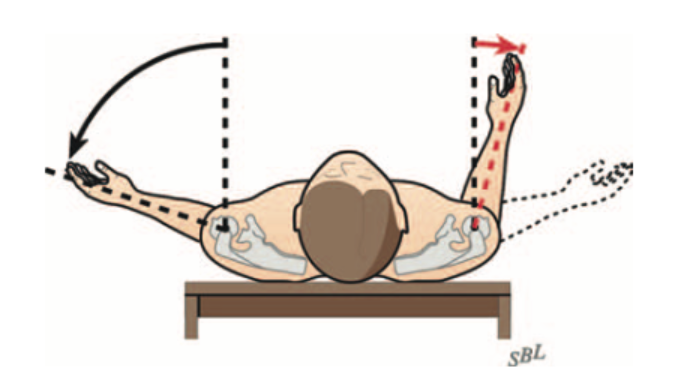
(1) Assess preoperative stiffness. Shoulders with limited external rotation when the arm is adducted are at higher risk of repair failure.
(2) Assess preoperative strength. Shoulders with weak internal rotation may have poor quality subscapularis tendons increasing risk of postoperative failure.
(3) Assess other risk factors for subscapularis failure: inflammatory arthropathy, malutrition, steroid use, prior surgery
(4) In shoulders at high risk for subscapularis failure, consider a reverse rather than an anatomic total shoulder (aTSA).
(5) In aTSA, release subscapularis tendon and subjacent capsule completely from lesser tuberosity, retaining capsule on the tendon’s deep surface.

(6) Perform a 360 degree release of the subscapularis from the coracoid, glenoid, and inferior capsule to optimize excursion of tendon

(7) Perform glenoid arthroplasty
(8) If necessary, trial undersized humeral head component so that the lateral border of the subscapularis reaches the reattachment site at the lesser tuberosity with the arm in external rotation.

(9) Pass six FiberWire sutures through quality bone at the lesser tuberosity
(10) Insert humeral component sized per trialing (#5 above)

(11) Place additional FiberWire sutures in the rotator interval to reinforce the repair.

(12) Tie repair sutures
(13) Verify satisfactory motion before skin closure.

(14) Start assisted flexion in recovery room (note: our practice is to avoid plexus blocks for shoulder arthroplasty to allow sensory feedback during these exercises).

(15) Allow use of arm for activities with elbow at side. Gradually transition to active elevation starting at six weeks after surgery.

(16) Allow progressive increase in resistance over the first postoperaive year, making sure that 20 repetitions are easy and comfortable before adding additional weight.

Current evidence suggests that standard and subscapularis-sparing approaches produce similar outcomes. We prefer subscapularis peel and secure repair because in our hands it provides excellent exposure for osteophyte resection and glenoid component positioning and seating. At the same time we recognize that other surgeons may be equally comfortable with the subscapularis-sparing approach.
Making Choices

Cliff Swallows
Kalaloch Lodge, Washington
2021
Shoulder arthritis – what you need to know (see this link).
How to x-ray the shoulder (see this link).
The ream and run procedure (see this link)
The total shoulder arthroplasty (see this link)
The cuff tear arthropathy arthroplasty (see this link).
The reverse total shoulder arthroplasty (see this link).
The smooth and move procedure for irreparable rotator cuff tears (see this link)

