

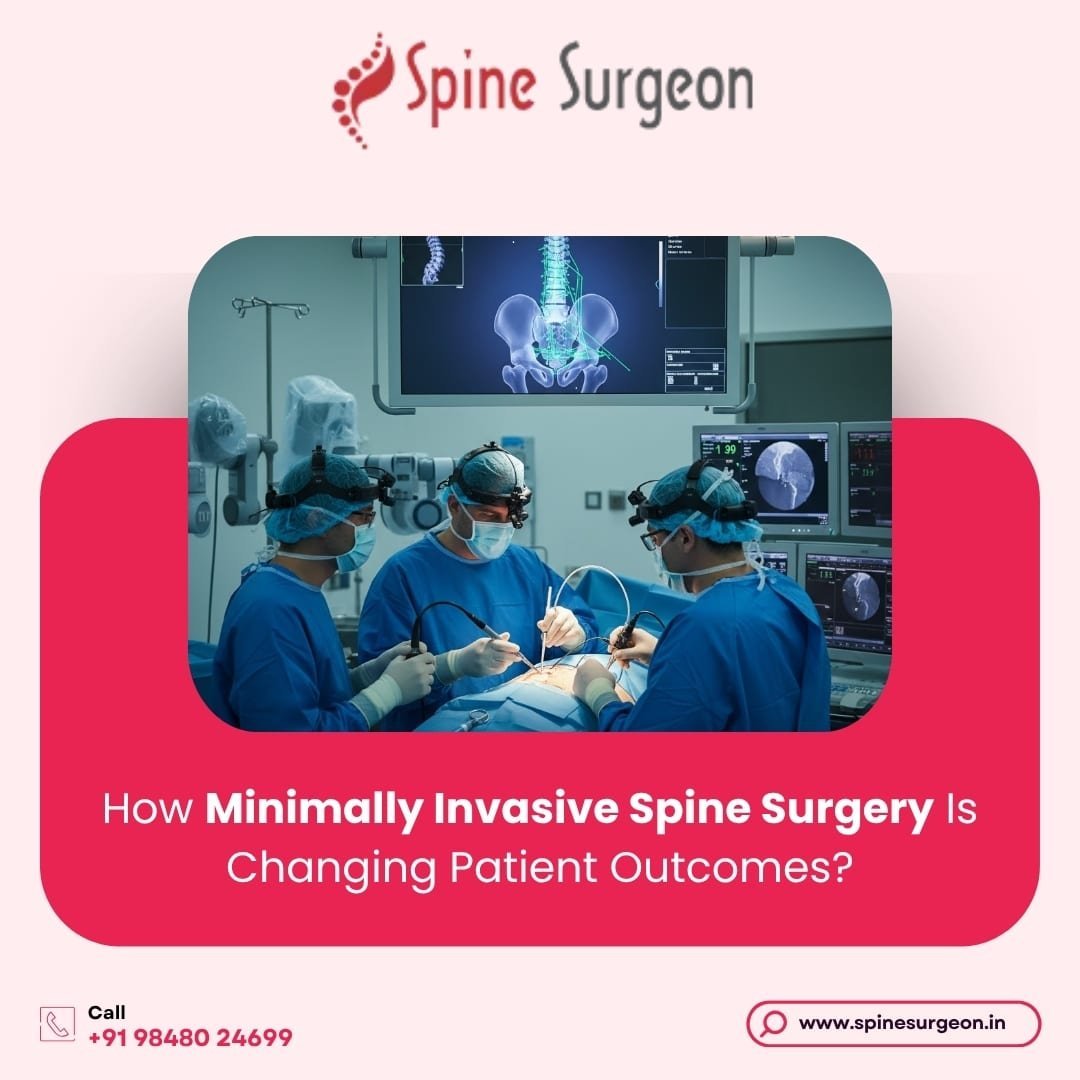
In the past, spine surgery often meant long hospital stays, extensive recovery periods, and significant postoperative pain. However, over the past two decades, Minimally Invasive Spine Surgery (MISS) has transformed the way surgeons treat spinal disorders. With smaller incisions, advanced technology, and precision-driven techniques, patients today are experiencing faster recoveries, less pain, and better outcomes than ever before.
This article examines minimally invasive spine surgery, its underlying principles, and its impact on revolutionizing spinal care for patients worldwide.
What Is Minimally Invasive Spine Surgery?
Minimally Invasive Spine Surgery (MISS) refers to a group of surgical techniques designed to correct spinal problems with smaller incisions and less disruption to muscles, ligaments, and tissues surrounding the spine. Instead of making large openings to reach the spine, surgeons use specialized instruments, cameras, and imaging guidance systems to perform complex procedures through tiny portals.
These procedures can be used to treat a variety of spinal conditions, including:
- Herniated or degenerative discs
- Spinal stenosis
- Spondylolisthesis
- Spinal deformities such as scoliosis
- Tumors and infections of the spine
The goal of MISS is to achieve the same — or better — results as traditional open surgery while minimizing trauma to the body.
The Technology Behind MISS
The success of minimally invasive spine surgery lies in technological innovation. Several cutting-edge tools and techniques make it possible for surgeons to work with extraordinary precision, even in the smallest spaces.
Endoscopic and Microscopic Visualization:
High-definition endoscopes and microscopes allow surgeons to see the spinal anatomy in great detail through a very small incision. Real-time imaging ensures that every move is guided and controlled.
Tubular Retractor Systems:
Instead of pulling apart large sections of muscle, surgeons insert tubular retractors that gently separate tissues. This preserves muscle integrity and reduces postoperative pain.
Intraoperative Navigation and Robotics:
Computer-assisted navigation and robotic systems have become increasingly popular. These technologies provide 3D imaging and help surgeons plan and execute every step with unparalleled accuracy.
Laser and Radiofrequency Tools:
Energy-based devices allow for precise tissue removal and cauterization, reducing blood loss and speeding up healing.
Together, these technologies enable procedures that once required major incisions to be completed through openings as small as 1–2 centimeters.
Advantages of Minimally Invasive Spine Surgery
The shift from traditional open spine surgery to MISS has brought about a host of benefits for both patients and healthcare providers.
Smaller Incisions, Less Scarring
Since incisions are typically less than an inch long, patients experience minimal scarring and reduced cosmetic concerns. The smaller wound size also lowers the risk of infection.
Reduced Blood Loss and Pain
By minimizing muscle cutting and tissue damage, MISS significantly reduces intraoperative blood loss and postoperative pain. This often means less reliance on narcotic pain medication after surgery.
Shorter Hospital Stays
Many minimally invasive spine procedures can be performed on an outpatient or same-day basis, allowing patients to go home within 24 hours. This not only reduces healthcare costs but also decreases exposure to hospital-acquired infections.
Faster Recovery and Return to Daily Life
Because less tissue is damaged, patients can begin walking within hours after surgery. Most resume light activities in days and return to work within a few weeks, depending on the procedure.
Improved Precision and Safety
With real-time imaging and computer-assisted navigation, surgeons can target the exact area that needs repair while avoiding critical nerves and structures, improving both safety and surgical success rates.
Common Minimally Invasive Procedures
Minimally invasive techniques are now applied across a wide range of spinal procedures. Some of the most common include:
- Microdiscectomy: Removal of a herniated disc fragment pressing on a nerve root.
- Laminectomy or Laminotomy: Relief of spinal stenosis by removing small portions of bone or ligament causing compression.
- Spinal Fusion: Stabilization of the spine using screws and rods, often assisted by navigation or robotic systems.
- Vertebroplasty and Kyphoplasty: Injection of bone cement to stabilize compression fractures.
- Disc Replacement: Implantation of an artificial disc through a small incision.
Each of these techniques aims to relieve pain, restore function, and prevent further spinal degeneration while preserving as much of the natural anatomy as possible.
How MISS Improves Long-Term Outcomes
Beyond the obvious advantages of faster recovery, the long-term outcomes of MISS are increasingly promising. Studies have shown that:
- Fusion rates and pain relief are comparable — and sometimes superior — to those of open surgery.
- Patient satisfaction is higher, owing to shorter downtime and improved cosmetic results.
- Reduced muscle damage leads to better spinal stability and mobility over time.
- Lower infection and reoperation rates make MISS safer in the long run.
Additionally, because patients recover more quickly, they can start physical therapy sooner — a critical component of long-term spine health.
The Role of Patient Selection
Not every patient or condition is suitable for minimally invasive spine surgery. Success depends heavily on proper patient selection and surgeon expertise. Factors such as the severity of the spinal condition, overall health, bone density, and previous surgeries must all be considered.
Surgeons typically conduct detailed imaging studies — such as MRI or CT scans — to determine whether a minimally invasive approach can provide the desired outcome. For complex deformities or multiple-level fusions, a hybrid approach combining minimally invasive and open techniques may be recommended.
The Future of Spine Surgery
The field of spinal surgery is advancing rapidly. The next wave of innovations promises even greater precision and patient comfort. Some exciting trends include:
- Robotic-Assisted Spine Surgery: Robots are now capable of assisting with screw placement and navigation, reducing human error and radiation exposure.
- Augmented Reality (AR) and Virtual Reality (VR): These technologies are enhancing surgical planning and intraoperative visualization.
- Artificial Intelligence (AI): AI-driven analytics are helping surgeons predict outcomes, customize treatments, and optimize recovery protocols.
- Biological and Regenerative Therapies: Stem cell research and biologics may soon complement MISS by promoting natural disc repair and bone healing.
These advancements aim to make spine surgery even safer, more effective, and more personalized.
Conclusion
Minimally Invasive Spine Surgery has redefined what’s possible in spinal care. By combining advanced technology with refined surgical skill, patients can experience faster recovery, less pain, and better long-term results. What once required large incisions and lengthy hospital stays can now often be done through a small opening — with patients walking the same day.
As innovation continues to evolve, the future of spine surgery looks brighter than ever. For patients suffering from back or neck pain, MISS offers not just hope for relief, but a genuine opportunity to regain mobility, confidence, and quality of life.
If you are someone facing spinal issues or recovering from surgery, it’s important to seek expert guidance. Consult Dr. Surya Prakash, Senior Spine Surgeon,with about 30 yrs experience to understand the best treatment options for your condition.
With a holistic approach that combines surgical expertise, minimally invasive techniques, and personalized rehabilitation, Dr. Surya Prakash ensures the safest and most effective path back to peak performance.
Book a consultation today and take the first step toward getting back in the game — stronger, healthier, and pain-free.

